Ghatasthapana: Meaning, Significance and Importance of Navratriघटस्थापना: अर्थ, धार्मिक महत्त्व आणि नवरात्रीतील महत्त्व
Oct 10, 2026 · 5 min read · 170 views
Introduction
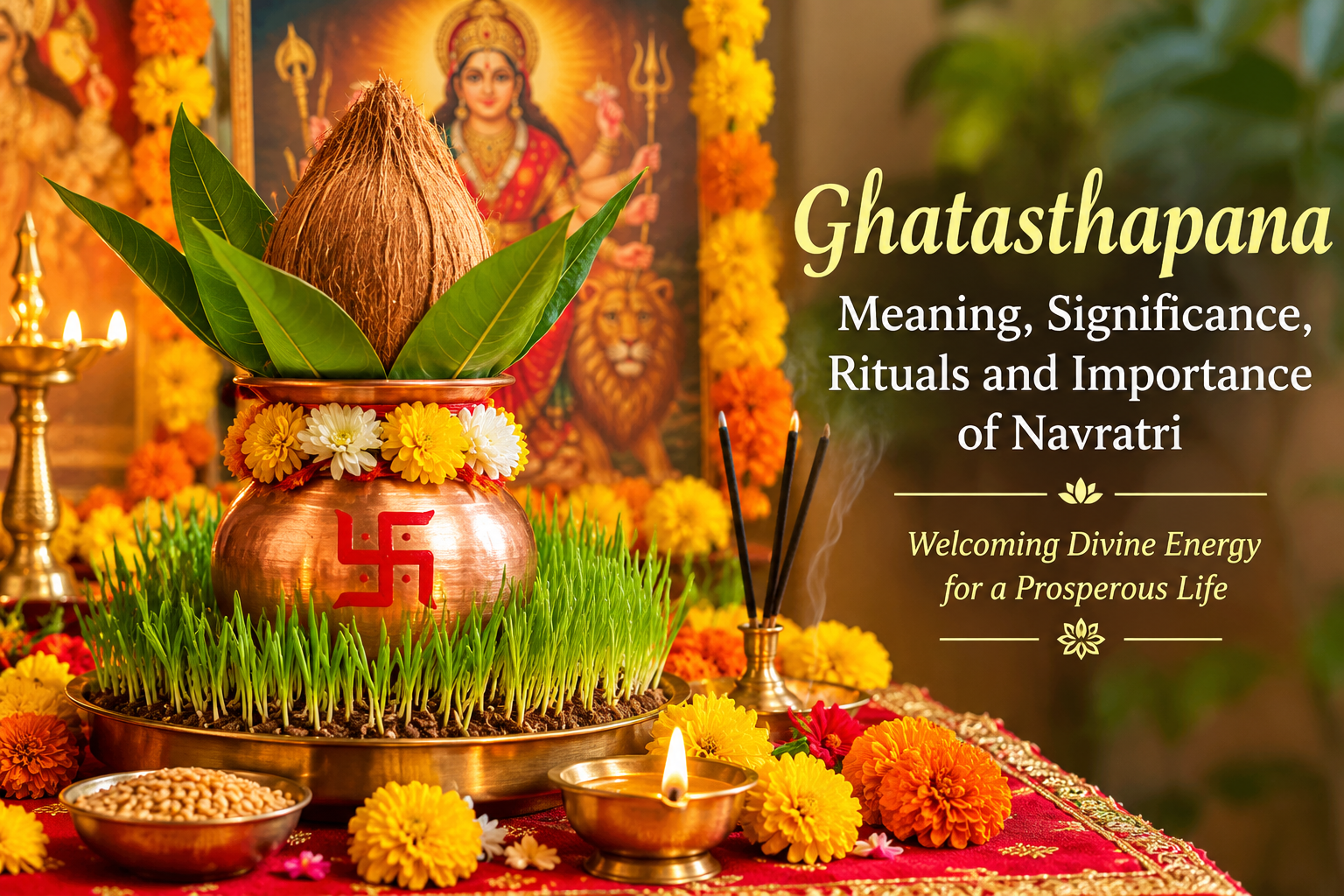
Ghatasthapana is one of the most important rituals performed at the beginning of Navratri, the sacred Hindu festival dedicated to Goddess Durga. It marks the beginning of nine days of devotion, prayer, fasting, and spiritual celebration. During this ritual, devotees invoke Goddess Durga and seek her blessings for happiness, prosperity, peace, and protection.
Ghatasthapana is also known as Kalash Sthapana. It symbolizes the welcoming of divine energy into the home and the beginning of a spiritually meaningful period.
What Is Ghatasthapana?
The word Ghatasthapana comes from two Sanskrit words: “Ghata,” meaning a sacred pot or Kalash, and “Sthapana,” meaning establishment or installation.
Therefore, Ghatasthapana means the ceremonial installation of a sacred Kalash. It is performed on the first day of Navratri, during an auspicious time known as Shubh Muhurat.
The Kalash is traditionally filled with water and decorated with mango leaves and a coconut. Barley seeds are often sown in soil near the Kalash, symbolizing growth, fertility, prosperity, and new beginnings.
Religious Significance of Ghatasthapana
Ghatasthapana holds deep spiritual significance in Hindu tradition. It represents the invocation of Goddess Durga and the beginning of nine days of worship.
The sacred Kalash is considered a symbol of abundance, purity, and divine presence. Through this ritual, devotees express their faith in the Goddess and pray for strength to overcome difficulties in life.
Ghatasthapana also reminds people that just as seeds grow with care and patience, spiritual growth requires devotion, discipline, and positive actions.
Importance of Ghatasthapana During Navratri
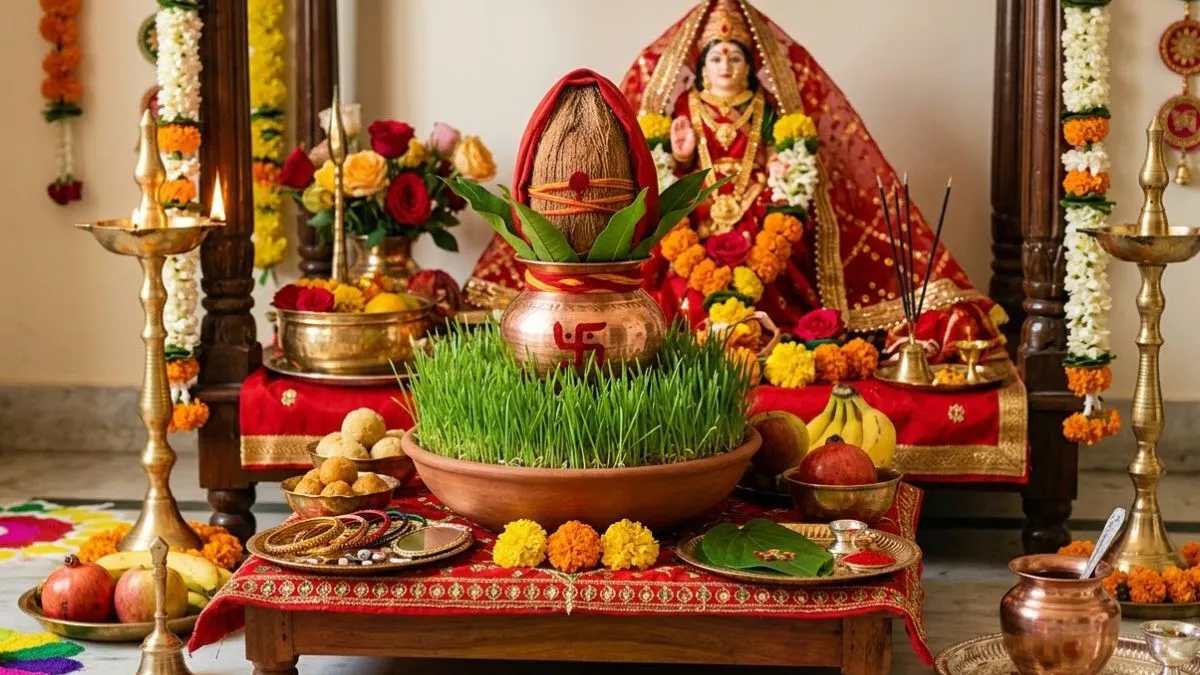
Navratri is dedicated to the worship of the divine feminine energy, known as Shakti. Goddess Durga represents courage, strength, compassion, and the victory of good over evil.
Ghatasthapana marks the beginning of this sacred celebration. It encourages devotees to focus on prayer, self-discipline, kindness, and inner peace.
Many families observe fasts, recite Durga mantras, read sacred texts, and perform daily aarti throughout the nine days.
How Is Ghatasthapana Performed?
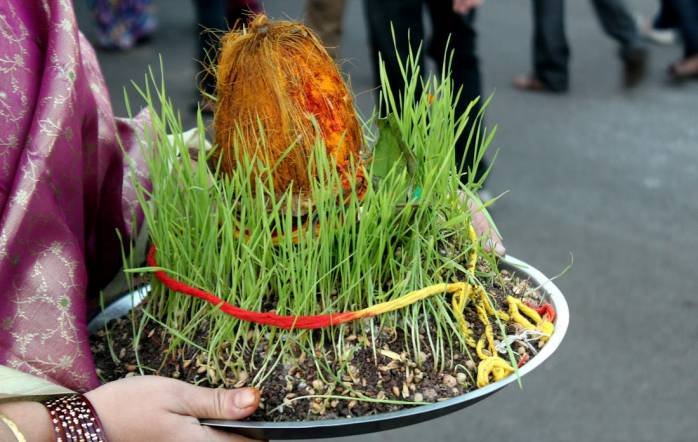
The exact customs may vary by region and family tradition. A common method includes the following steps:
1. Clean the Puja Area: Clean the place where the ritual will be performed and decorate it with flowers and rangoli.
2. Prepare the Soil: Place clean soil in a container and sow barley seeds, according to family tradition.
3. Prepare the Kalash: Fill a sacred pot with water and decorate it with mango leaves and a coconut.
4. Invoke Goddess Durga: Offer prayers and flowers to the Goddess with devotion.
5. Light a Diya: Light an oil lamp and offer incense as part of the worship.
6. Perform Aarti: Recite prayers, mantras, or Durga Stuti according to your tradition.
7. Daily Worship: Water the barley seeds when appropriate and maintain the sacred space throughout Navratri.
Devotees generally perform Ghatasthapana during the prescribed auspicious time. The correct Muhurat depends on the date and location, so it is best to consult a reliable local Panchang.
Symbolism of the Kalash and Barley Seeds
Every element used in Ghatasthapana has symbolic meaning.
- Kalash: Represents auspiciousness, abundance, and divine energy.
- Water: Symbolizes purity and the source of life.
- Coconut: Represents devotion and an offering to the divine.
- Mango Leaves: Symbolize life, freshness, and prosperity.
- Barley Seeds: Represent growth, fertility, hope, and new beginnings.
- Diya: Symbolizes knowledge, positivity, and the removal of darkness.
Together, these elements express the devotee's prayers for a peaceful and prosperous life.
Spiritual Message of Ghatasthapana
Ghatasthapana teaches us the importance of faith, patience, discipline, and positive thinking. Just as a seed slowly grows into a plant, good habits and sincere efforts can bring meaningful changes to our lives.
The ritual encourages us to remove negativity, develop inner strength, respect others, and walk on the path of truth and righteousness.
Navratri is not only a time for religious celebration but also an opportunity for spiritual reflection and personal growth.
Conclusion
Ghatasthapana is a sacred Hindu ritual that marks the beginning of Navratri and welcomes the blessings of Goddess Durga. Its meaning goes beyond the installation of a Kalash; it represents hope, purity, prosperity, and the awakening of divine energy.
By performing Ghatasthapana with faith and devotion, devotees begin Navratri with prayers for happiness, strength, and peace. May Goddess Durga bless every home with wisdom, courage, prosperity, and positivity.
Jai Mata Di! 🙏
Frequently Asked Questions (FAQs)
1. What is Ghatasthapana?
Ghatasthapana is a Hindu ritual performed on the first day of Navratri to invoke Goddess Durga and mark the beginning of nine days of worship.
2. What is the meaning of Ghatasthapana?
Ghatasthapana means the installation of a sacred pot or Kalash.
3. Why is Ghatasthapana important?
It symbolizes divine energy, prosperity, purity, and the beginning of Navratri.
4. What is placed in the Ghatasthapana Kalash?
Traditionally, the Kalash contains water and is decorated with mango leaves and a coconut. Customs may vary by region.
5. When should Ghatasthapana be performed?
It is performed on the first day of Navratri during an auspicious time determined by the local Panchang.
6. What do barley seeds symbolize during Ghatasthapana?
They symbolize growth, fertility, prosperity, and new beginnings.
घटस्थापना मराठी लेख
घटस्थापना: अर्थ, धार्मिक महत्त्व आणि नवरात्रीतील महत्त्व
प्रस्तावना
घटस्थापना हा हिंदू धर्मातील एक महत्त्वाचा धार्मिक विधी आहे. नवरात्रीच्या पहिल्या दिवशी घटस्थापना केली जाते. हा उत्सव आदिशक्ती माता दुर्गेला समर्पित असतो. घटस्थापनेच्या माध्यमातून देवीचे आवाहन करून घरात सुख, शांती, समृद्धी आणि सकारात्मक ऊर्जा नांदावी, अशी प्रार्थना केली जाते.
घटस्थापनेला कलश स्थापना असेही म्हटले जाते. हा विधी श्रद्धा, पवित्रता, भक्ती आणि शुभारंभाचे प्रतीक मानला जातो.
घटस्थापना म्हणजे काय?
‘घट’ म्हणजे पवित्र कलश आणि ‘स्थापना’ म्हणजे स्थापित करणे. त्यामुळे घटस्थापना म्हणजे धार्मिक विधीनुसार पवित्र कलशाची स्थापना करणे.
या विधीमध्ये कलशाची पूजा केली जाते. परंपरेनुसार कलशाला आंब्याची पाने आणि नारळ लावला जातो. काही ठिकाणी कलशाजवळ मातीमध्ये जव पेरले जातात. जव हे वाढ, समृद्धी, सुपीकता आणि नवीन सुरुवातीचे प्रतीक मानले जातात.
घटस्थापनेचे धार्मिक महत्त्व
घटस्थापना हा माता दुर्गेच्या शक्तीचे आणि दिव्य ऊर्जेचे आवाहन करण्याचा पवित्र विधी आहे. भक्त देवीची पूजा करून कुटुंबाच्या सुखासाठी, आरोग्यासाठी, समृद्धीसाठी आणि संकटांपासून रक्षण मिळावे यासाठी प्रार्थना करतात.
पवित्र कलश शुभत्व आणि समृद्धीचे प्रतीक मानला जातो. हा विधी आपल्याला श्रद्धा, संयम, चांगले विचार आणि सत्याच्या मार्गावर चालण्याची प्रेरणा देतो.
नवरात्रीमध्ये घटस्थापनेचे महत्त्व
नवरात्र हा माता दुर्गेच्या उपासनेचा नऊ दिवसांचा पवित्र उत्सव आहे. या काळात देवीच्या विविध रूपांची पूजा केली जाते.
घटस्थापनेने नवरात्रीच्या उत्सवाची सुरुवात होते. भक्त आपल्या परंपरेनुसार उपवास करतात, देवीची आरती म्हणतात, मंत्रजप करतात आणि कुटुंबाच्या कल्याणासाठी देवीचा आशीर्वाद मागतात.
घटस्थापना कशी करतात?
घटस्थापनेची पद्धत प्रदेशानुसार आणि कौटुंबिक परंपरेनुसार बदलू शकते. सर्वसाधारणपणे पुढील गोष्टी केल्या जातात:
१. पूजा करण्याची जागा स्वच्छ करून रांगोळी आणि फुलांनी सजवली जाते.
२. परंपरेनुसार एका पात्रात माती घेऊन त्यामध्ये जव पेरले जातात.
३. पवित्र कलशामध्ये पाणी भरून त्याला आंब्याची पाने आणि नारळ लावला जातो.
४. माता दुर्गेचे आवाहन करून फुले आणि पूजेचे साहित्य अर्पण केले जाते.
५. दिवा आणि अगरबत्ती लावली जाते.
६. देवीची आरती, मंत्रजप आणि प्रार्थना केली जाते.
७. नवरात्रीच्या नऊ दिवसांत श्रद्धेने देवीची नियमित पूजा केली जाते.
घटस्थापना करताना स्थानिक पंचांगानुसार शुभ मुहूर्त पाहणे योग्य मानले जाते.
घटस्थापनेचा आध्यात्मिक संदेश
घटस्थापना आपल्याला श्रद्धा, संयम, सकारात्मक विचार आणि चांगल्या कर्मांचे महत्त्व शिकवते. जसे एखादे बीज योग्य काळजी घेतल्याने हळूहळू वाढते, तसेच आपल्या जीवनातही चांगले विचार आणि सत्कर्मांमुळे सकारात्मक बदल घडू शकतात.
नवरात्र हा केवळ धार्मिक उत्सव नसून स्वतःमध्ये चांगले बदल घडवण्याची आणि मनातील नकारात्मकता दूर करण्याची संधी आहे.
निष्कर्ष
घटस्थापना हा नवरात्रीच्या सुरुवातीचा पवित्र विधी आहे. तो श्रद्धा, समृद्धी, पवित्रता आणि देवीच्या आशीर्वादाचे प्रतीक आहे.
माता दुर्गेच्या कृपेने सर्वांच्या जीवनात सुख, शांती, आरोग्य, आनंद आणि समृद्धी नांदो, हीच प्रार्थना.
जय माता दी! 🙏🌺
वारंवार विचारले जाणारे प्रश्न
१. घटस्थापना म्हणजे काय?
नवरात्रीच्या पहिल्या दिवशी माता दुर्गेचे आवाहन करण्यासाठी केला जाणारा पवित्र कलश स्थापनेचा विधी म्हणजे घटस्थापना.
२. घटस्थापना का केली जाते?
देवीचा आशीर्वाद, सुख, शांती, समृद्धी आणि सकारात्मक ऊर्जा मिळावी, या श्रद्धेने घटस्थापना केली जाते.
३. घटस्थापनेत जव का पेरतात?
जव हे वाढ, समृद्धी, सुपीकता आणि नवीन सुरुवातीचे प्रतीक मानले जातात.
४. घटस्थापना कधी करतात?
नवरात्रीच्या पहिल्या दिवशी स्थानिक पंचांगानुसार शुभ मुहूर्तावर घटस्थापना केली जाते.