Lingashtakam Stotram: Lyrics, Meaning, Benefits & Importance of Lord Shiva Worship
Oct 31, 2026 · 6 min read · 81 views
Introduction
Lord Shiva is one of the principal deities in Hinduism and is worshipped as the symbol of transformation, divine consciousness, and spiritual liberation. Devotees worship Lord Shiva in many forms, especially as the Shiva Lingam, which represents the infinite and formless nature of the divine.
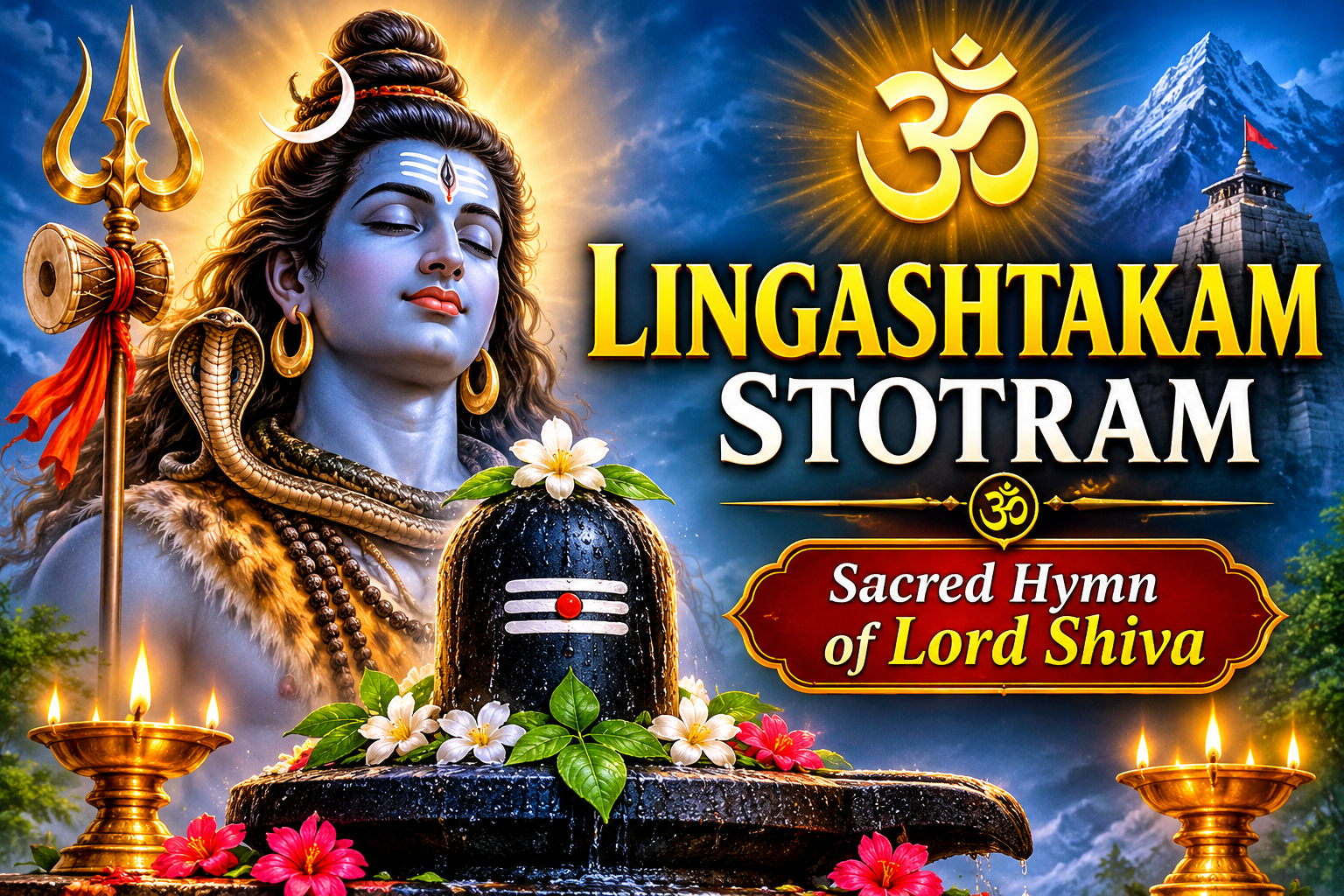
Lingashtakam Stotram is a sacred Sanskrit hymn dedicated to Lord Shiva. Devotees recite this powerful devotional prayer to express their faith, seek inner peace, and deepen their spiritual connection with Mahadev.
The word “Lingashtakam” consists of two words: “Linga,” referring to the Shiva Lingam, and “Ashtakam,” meaning a collection of eight verses. This hymn praises the divine qualities and spiritual significance of Lord Shiva.
What Is Lingashtakam Stotram?
Lingashtakam Stotram is a devotional hymn consisting of eight verses praising Lord Shiva in the form of the Shiva Lingam.
The hymn describes the Shiva Lingam as sacred, eternal, and worthy of devotion. It celebrates Shiva's divine nature and reminds devotees of the importance of faith, humility, purity, and surrender.
Many devotees recite Lingashtakam during their daily prayers, especially on Mondays, during the holy month of Shravan, and on Maha Shivaratri.
Lingashtakam Stotram Lyrics
The following is the commonly recited Sanskrit version of Lingashtakam Stotram.
1.
Brahma Muraari Surarchita Lingam
Nirmala Bhaasita Shobhita Lingam
Janmaja Dukha Vinaashaka Lingam
Tat Pranamaami Sadaashiva Lingam
2.
Devamuni Pravaraarchita Lingam
Kaamadaham Karunaakara Lingam
Raavana Darpa Vinaashana Lingam
Tat Pranamaami Sadaashiva Lingam
3.
Sarva Sugandhi Sulepita Lingam
Buddhi Vivardhana Kaarana Lingam
Siddha Suraasura Vandita Lingam
Tat Pranamaami Sadaashiva Lingam
4.
Kanaka Mahaamani Bhooshita Lingam
Phanipati Veshtita Shobhita Lingam
Daksha Suyajna Vinaashana Lingam
Tat Pranamaami Sadaashiva Lingam
5.
Kumkuma Chandana Lepita Lingam
Pankaja Haara Sushobhita Lingam
Sanchita Paapa Vinaashana Lingam
Tat Pranamaami Sadaashiva Lingam
6.
Deva Ganaarchita Sevita Lingam
Bhaavair Bhaktibhireva Cha Lingam
Dinakara Koti Prabhaakara Lingam
Tat Pranamaami Sadaashiva Lingam
7.
Ashta Dalo Pariveshtita Lingam
Sarva Samudbhava Kaarana Lingam
Ashta Daridra Vinaashita Lingam
Tat Pranamaami Sadaashiva Lingam
8.
Suraguru Suravara Poojita Lingam
Suravana Pushpa Sadaarchita Lingam
Paraathparam Paramatmaka Lingam
Tat Pranamaami Sadaashiva Lingam
Phala Shruti
Lingashtakam Idam Punyam
Yah Pathet Shiva Sannidhau
Shivalokam Avaapnoti
Shivena Saha Modate
Note: Sanskrit transliterations may vary slightly across traditional editions.
Meaning of Lingashtakam Stotram
The eight verses describe different divine qualities of Lord Shiva and the spiritual significance of worshipping the Shiva Lingam.
1. The Divine Form Worshipped by the Gods
The opening verse praises the Shiva Lingam, which is worshipped by Brahma, Vishnu, and other divine beings. It describes Shiva as a source of purity and spiritual freedom.
2. The Destroyer of Pride and Desires
This verse celebrates Lord Shiva's power to destroy arrogance and uncontrolled desires. It also highlights his compassionate nature.
3. The Source of Wisdom
The third verse praises the Shiva Lingam as a symbol associated with the growth of wisdom and devotion. It reminds devotees to seek knowledge and spiritual understanding.
4. The Supreme Power of Lord Shiva
This verse recalls stories associated with Lord Shiva's divine power and his role in the destruction of Daksha's sacrifice.
5. Purification Through Devotion
The fifth verse describes the worship of the Shiva Lingam with sacred sandalwood, kumkum, and flowers. It expresses the hope of becoming free from the burden of past wrongdoings through sincere devotion.
6. The Radiance of the Divine
This verse praises the divine brilliance of Lord Shiva and emphasizes that sincere devotion is an important part of worship.
7. The Origin of Creation
The seventh verse presents the Shiva Lingam as a symbol of the source of creation and praises Shiva's power to overcome various forms of hardship.
8. The Supreme Divine Reality
The final verse praises Lord Shiva as the Supreme Reality and the divine presence beyond ordinary understanding.
Spiritual Benefits of Chanting Lingashtakam Stotram
Devotees believe that reciting Lingashtakam Stotram with faith can support their spiritual lives in several ways.
1. Inner Peace: Chanting a devotional hymn can provide a peaceful moment for prayer and reflection.
2. Stronger Faith: Regular recitation can help devotees deepen their connection with Lord Shiva.
3. Positive Mindset: Prayer and meditation may encourage calmness, gratitude, and positive thinking.
4. Spiritual Discipline: Daily chanting can become a meaningful part of a regular spiritual routine.
5. Devotion and Surrender: The hymn reminds devotees to approach the divine with humility and sincerity.
These are spiritual beliefs and personal experiences rather than scientifically guaranteed outcomes.
When Should You Chant Lingashtakam?
There is no single compulsory time for reciting Lingashtakam Stotram. Devotees commonly choose the following occasions:
- Monday, considered an auspicious day for Lord Shiva worship.
- Maha Shivaratri, the sacred festival dedicated to Lord Shiva.
- The month of Shravan, which is especially associated with Shiva devotion.
- Early morning during daily prayers.
- During Shiva Lingam worship at home or in a temple.
Choose a quiet place, sit comfortably, and recite the hymn with concentration and devotion.
How to Worship Lord Shiva While Chanting
You can follow a simple devotional routine at home:
1. Clean the place of worship and sit peacefully before your Shiva Lingam or image of Lord Shiva.
2. Offer water and flowers according to your family traditions.
3. Light a diya if it is safe to do so.
4. Chant “Om Namah Shivaya” a few times.
5. Recite Lingashtakam Stotram with devotion.
6. End your prayer with gratitude and a wish for the well-being of your family and all living beings.
Elaborate rituals are not essential for a simple personal prayer. Sincere devotion is central to worship.
Frequently Asked Questions (FAQs)
1. What is Lingashtakam Stotram?
Lingashtakam is a Sanskrit devotional hymn consisting of eight verses praising Lord Shiva in the form of the Shiva Lingam.
2. Can I chant Lingashtakam every day?
Yes. Devotees may recite it daily as part of their regular prayers.
3. Is Lingashtakam suitable for Mondays?
Yes. Monday is traditionally associated with Lord Shiva, making it a popular day for chanting this hymn.
4. What is the main message of Lingashtakam?
Its central message is devotion to Lord Shiva, reverence for the divine, humility, and the pursuit of spiritual understanding.
5. Can beginners chant Lingashtakam?
Yes. Beginners can start by listening to a traditional recitation, learning the pronunciation gradually, and understanding the meaning of each verse.
Conclusion
Lingashtakam Stotram is a beautiful expression of devotion to Lord Shiva. Its eight verses praise Shiva's divine nature, spiritual significance, and supreme reality.
For devotees, chanting this sacred hymn is an opportunity to pause, pray, cultivate inner peace, and strengthen their faith.
May Lord Shiva bless everyone with wisdom, peace, strength, and spiritual growth.
Har Har Mahadev! 🕉️
Om Namah Shivaya! 🙏
#Lingashtakam #LingashtakamStotram #LordShiva #ShivaStotram #OmNamahShivaya #HarHarMahadev #ShivaBhakti #SanatanDharma #MantrasAndStotras #HinduSpirituality #Mahadev #ShivaWorship