
Maha Mrityunjaya Mantra: Meaning, Significance and Spiritual Benefits
Oct 28, 2026 · 6 min read · 114 views
Introduction
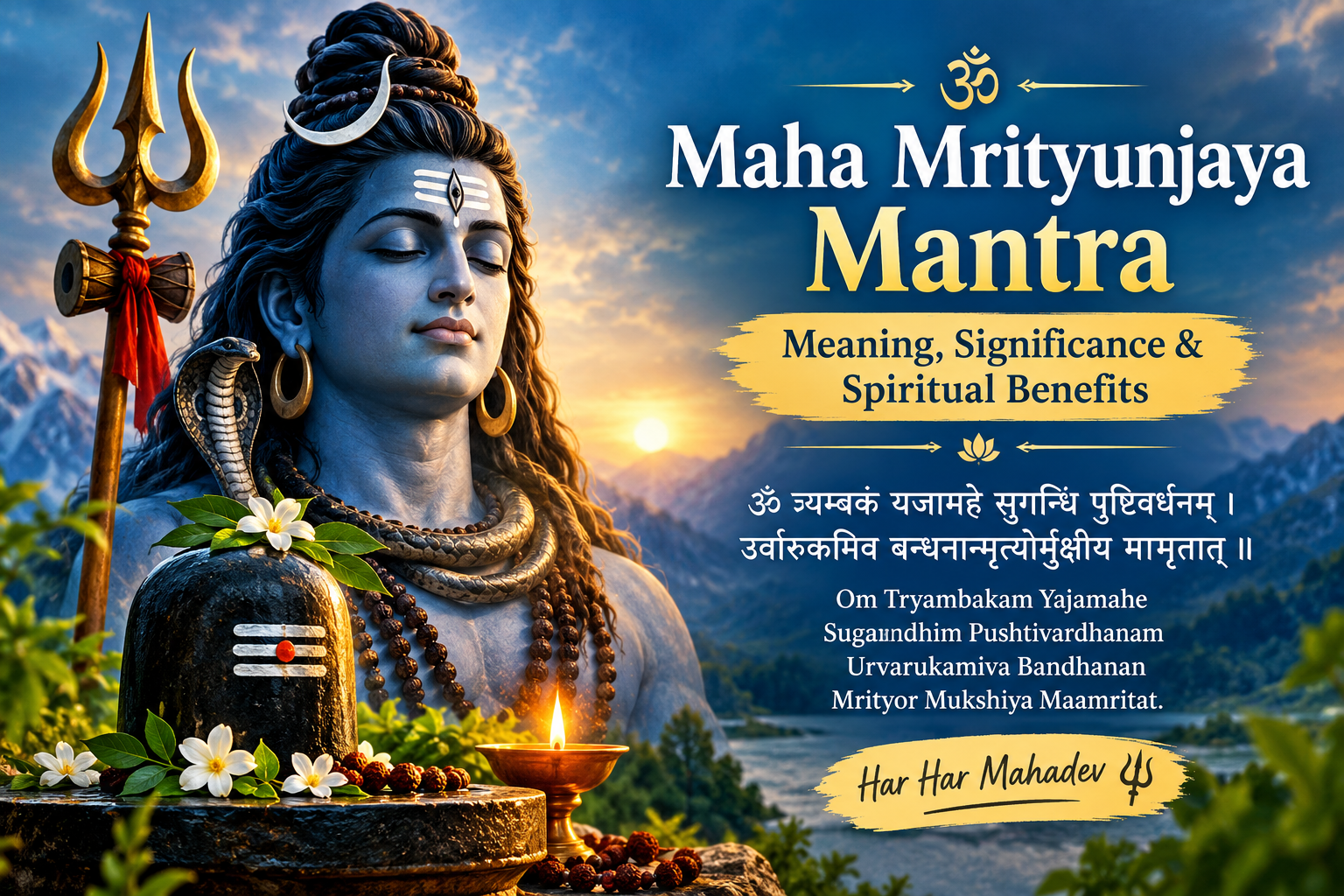
The Maha Mrityunjaya Mantra is one of the most powerful and sacred mantras in Hinduism. It is dedicated to Lord Shiva, who is worshipped as the destroyer of evil, the protector of devotees, and the source of spiritual wisdom.
Also known as the Rudra Mantra or Tryambakam Mantra, this ancient Vedic mantra is traditionally chanted for peace, courage, spiritual growth, and prayers for health and protection.
The mantra teaches us to overcome fear, strengthen our faith, and seek freedom from suffering through divine grace.
Maha Mrityunjaya Mantra in Sanskrit
ॐ त्र्यम्बकं यजामहे सुगन्धिं पुष्टिवर्धनम्।
उर्वारुकमिव बन्धनान्मृत्योर्मुक्षीय मामृतात्॥
Maha Mrityunjaya Mantra in English
Om Tryambakam Yajamahe
Sugandhim Pushtivardhanam
Urvarukamiva Bandhanan
Mrityor Mukshiya Maamritat.
Maha Mrityunjaya Mantra Meaning in English
Let us worship the three-eyed Lord Shiva, who nourishes and sustains all living beings. May He liberate us from the bondage of death and lead us towards immortality, just as a ripe cucumber naturally separates from its vine.
In a spiritual sense, the mantra is a prayer for liberation from fear, ignorance, suffering, and attachment. It expresses the devotee's desire to receive Lord Shiva's grace and move towards spiritual freedom.
Word-by-Word Meaning
- Om: The sacred sound representing the ultimate reality.
- Tryambakam: The three-eyed Lord Shiva.
- Yajamahe: We worship and offer our prayers.
- Sugandhim: The one whose divine presence spreads goodness and blessings.
- Pushtivardhanam: The one who nourishes and strengthens all living beings.
- Urvarukamiva: Like a ripe cucumber.
- Bandhanan: From bondage or attachment.
- Mrityor Mukshiya: May we be liberated from death.
- Ma Amritat: Not from immortality or the state of spiritual liberation.
Together, these words express a heartfelt prayer to Lord Shiva for freedom from fear and the attainment of spiritual peace.
Significance of the Maha Mrityunjaya Mantra
1. A Sacred Prayer to Lord Shiva
The Maha Mrityunjaya Mantra is deeply associated with Lord Shiva. Devotees chant it to express their devotion, surrender their worries, and seek divine guidance during difficult times.
2. A Symbol of Courage and Hope
Life brings challenges, uncertainty, and difficult moments. Chanting this mantra can serve as a reminder to remain courageous, hopeful, and spiritually connected during challenging situations.
3. Promotes Peace and Positive Reflection
Repetitive chanting, when practised calmly and with attention, may help some people feel more relaxed and focused. It can become a meaningful part of meditation and daily spiritual practice.
4. A Prayer for Health and Well-Being
Many Hindu devotees chant this mantra while praying for the well-being of themselves and their loved ones. It is also recited during times of illness or uncertainty as an expression of faith and hope.
However, the mantra should be understood as a spiritual practice, not a substitute for medical treatment or professional healthcare.
5. Encourages Spiritual Growth
The mantra reminds us that human life is temporary and encourages us to look beyond material attachments. It inspires reflection on the soul, spiritual freedom, and the deeper purpose of life.
Benefits of Chanting the Maha Mrityunjaya Mantra
Devotees traditionally believe that chanting this mantra with faith and devotion can help them:
- Develop courage and inner strength.
- Cultivate peace of mind.
- Strengthen their connection with Lord Shiva.
- Focus their thoughts during meditation.
- Face life's challenges with greater hope.
- Pray for the health and well-being of loved ones.
- Reflect on spiritual freedom and the impermanent nature of life.
These are traditional spiritual beliefs and personal experiences, not guaranteed medical outcomes.
How to Chant the Maha Mrityunjaya Mantra
You can incorporate this sacred mantra into your daily spiritual routine by following these simple steps:
1. Find a clean and peaceful place.
2. Sit comfortably and take a few slow breaths.
3. Remember Lord Shiva with devotion.
4. Chant the Maha Mrityunjaya Mantra slowly and clearly.
5. Repeat it 11, 21, or 108 times according to your preference.
6. Spend a few moments in silence after chanting.
7. End your practice with a prayer for peace and the well-being of all living beings.
You may chant the mantra in the morning, during meditation, or whenever you wish to spend time in prayer. Sincerity and focused attention are more important than following a particular number of repetitions.
Why Is the Mantra Associated with Immortality?
The Maha Mrityunjaya Mantra is often called the Great Death-Conquering Mantra. Its association with immortality does not simply mean a prayer for the physical body to live forever.
From a spiritual perspective, the mantra expresses the desire to overcome the fear of death and attain liberation from the cycle of suffering and worldly attachment.
The image of a ripe cucumber separating naturally from its vine represents release from bondage. It teaches us to move towards freedom with grace rather than remain trapped by fear.
Maha Mrityunjaya Mantra and Lord Shiva
Lord Shiva represents transformation, wisdom, detachment, and the destruction of ignorance. Devotees turn to Him for spiritual strength and guidance.
Chanting the Maha Mrityunjaya Mantra can be a way of remembering these qualities and cultivating them in everyday life.
For many devotees, the mantra is not merely a collection of sacred words; it is an expression of faith, surrender, and hope.
Frequently Asked Questions (FAQs)
1. What is the Maha Mrityunjaya Mantra?
The Maha Mrityunjaya Mantra is an ancient Vedic mantra dedicated to Lord Shiva. It is traditionally chanted as a prayer for liberation from death, fear, and suffering.
2. How many times should I chant the mantra?
You may chant it 11, 21, or 108 times, depending on your preference and available time. These are common devotional practices, not compulsory rules.
3. Can I chant the Maha Mrityunjaya Mantra every day?
Yes. Devotees commonly chant it daily as part of their prayer or meditation routine.
4. When is the best time to chant this mantra?
Early morning is a popular time for chanting. However, you may practise at another peaceful time that suits your daily routine.
5. Can I chant the mantra for my family?
Yes. Many devotees chant it while praying for the well-being, peace, and protection of their family members.
6. Does the Maha Mrityunjaya Mantra guarantee protection from illness or death?
No mantra can guarantee freedom from illness or death. The mantra is a sacred spiritual practice that may offer comfort, hope, and a sense of connection with one's faith. Medical concerns should always receive appropriate professional care.
Conclusion
The Maha Mrityunjaya Mantra is a timeless prayer that carries a profound message of faith, courage, and spiritual liberation. Dedicated to Lord Shiva, it reminds us to rise above fear, face life's difficulties with strength, and seek peace within ourselves.
Whether chanted during daily worship or quiet meditation, this sacred mantra can become a meaningful part of a spiritual journey.
May Lord Shiva bless every devotee with wisdom, courage, peace, and spiritual strength.
Har Har Mahadev! Om Namah Shivaya! 🙏