Rudrashtakam Stotram – Complete Guide, Lyrics, Meaning and Spiritual Benefits
Nov 1, 2026 · 5 min read · 76 views
Introduction
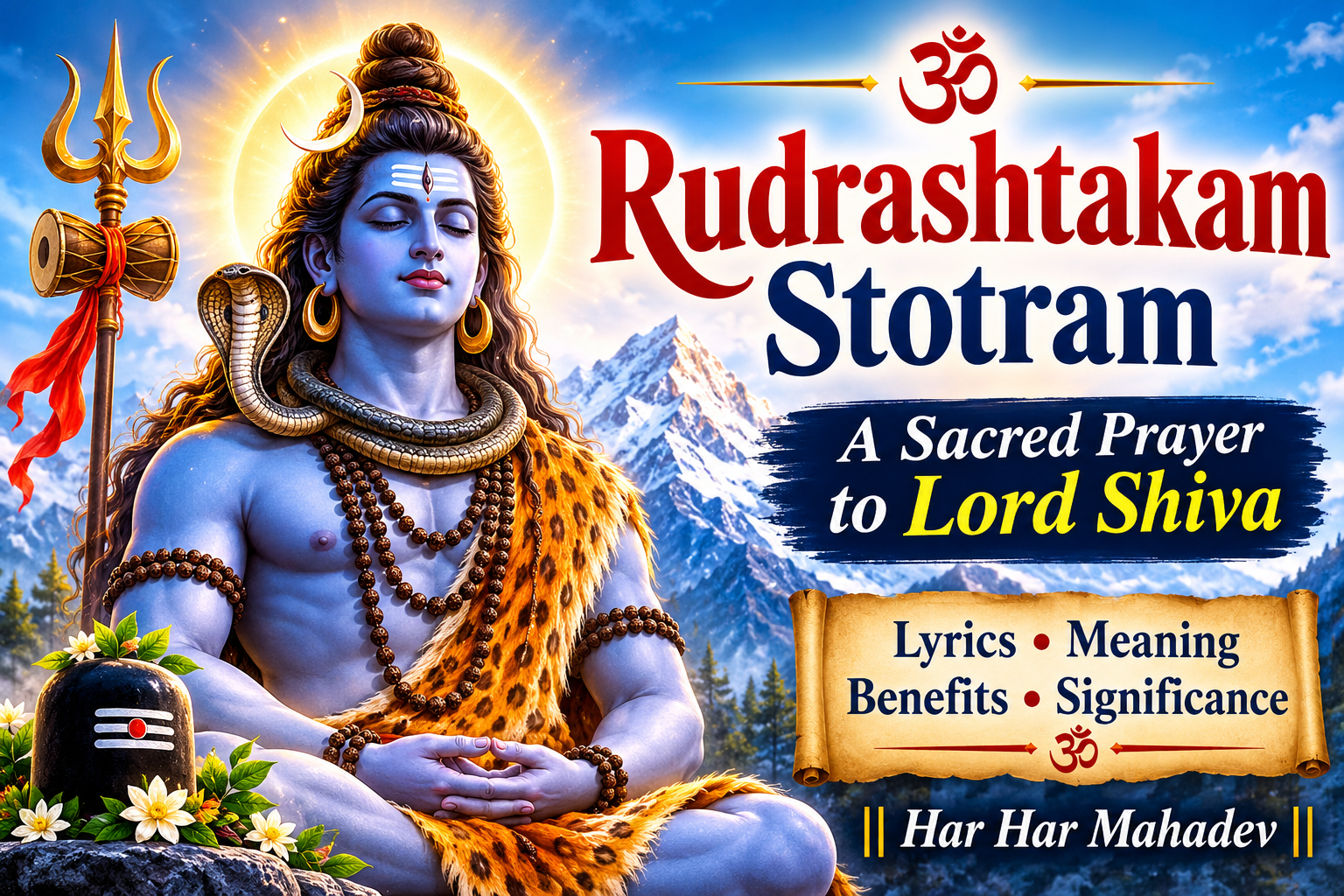
Rudrashtakam Stotram is one of the most beautiful and devotional Sanskrit hymns dedicated to Lord Shiva. It describes the infinite power, divine nature, compassion and greatness of Mahadev. Devotees recite this sacred stotram to express their love, faith and surrender to Lord Shiva.
The word Rudrashtakam is made up of two words: Rudra, another name of Lord Shiva, and Ashtakam, which means a composition of eight verses.
This powerful devotional hymn reminds us that Lord Shiva is beyond time, space, physical form and worldly attachments. It inspires devotees to follow the path of truth, humility, devotion and spiritual wisdom.
1. Who Composed Rudrashtakam Stotram?
Rudrashtakam Stotram was composed by Goswami Tulsidas, the famous Hindu saint and poet who also wrote the Ramcharitmanas.
This sacred hymn appears in the Uttara Kand of the Ramcharitmanas. Through its beautiful Sanskrit verses, Tulsidas expresses deep devotion towards Lord Shiva.
The stotram describes Shiva as the supreme reality, the destroyer of ignorance and the source of spiritual liberation.
2. Rudrashtakam Stotram Sanskrit Lyrics
॥ श्री रुद्राष्टकम् ॥
नमामीशमीशान निर्वाणरूपं।
विभुं व्यापकं ब्रह्मवेदस्वरूपम्॥
निजं निर्गुणं निर्विकल्पं निरीहं।
चिदाकाशमाकाशवासं भजेऽहम्॥
निराकारमोङ्कारमूलं तुरीयं।
गिरा ज्ञान गोतीतमीशं गिरीशम्॥
करालं महाकालकालं कृपालं।
गुणागार संसारपारं नतोऽहम्॥
तुषाराद्रि संकाश गौरं गभीरं।
मनोभूत कोटिप्रभा श्री शरीरम्॥
स्फुरन्मौलि कल्लोलिनी चारु गङ्गा।
लसद्भालबालेन्दु कण्ठे भुजङ्गा॥
चलत्कुण्डलं भ्रू सुनेत्रं विशालं।
प्रसन्नाननं नीलकण्ठं दयालम्॥
मृगाधीशचर्माम्बरं मुण्डमालं।
प्रियं शङ्करं सर्वनाथं भजामि॥
प्रचण्डं प्रकृष्टं प्रगल्भं परेशं।
अखण्डं अजं भानुकोटिप्रकाशम्॥
त्रयः शूलनिर्मूलनं शूलपाणिं।
भजेऽहं भवानीपतिं भावगम्यम्॥
कलातीतकल्याण कल्पान्तकारी।
सदा सज्जनानन्ददाता पुरारी॥
चिदानन्दसंदोह मोहापहारी।
प्रसीद प्रसीद प्रभो मन्मथारी॥
न यावद् उमानाथ पादारविन्दं।
भजन्तीह लोके परे वा नराणाम्॥
न तावत्सुखं शान्ति सन्तापनाशं।
प्रसीद प्रभो सर्वभूताधिवासम्॥
न जानामि योगं जपं नैव पूजां।
नतोऽहं सदा सर्वदा शम्भु तुभ्यम्॥
जराजन्मदुःखौघ तातप्यमानं।
प्रभो पाहि आपन्नमामीश शम्भो॥
3. Meaning of Rudrashtakam Stotram
Rudrashtakam describes the different divine qualities of Lord Shiva.
- Nirakara: Lord Shiva is formless and infinite.
- Nirguna: He is beyond the three qualities of nature.
- Mahakala: He is the supreme power beyond time.
- Neelkantha: He is the compassionate Lord who consumed poison to protect the universe.
- Shankara: He is the giver of happiness and welfare.
- Tripurari: He is the destroyer of evil and negativity.
These descriptions teach devotees that Shiva represents eternal truth, wisdom, compassion and divine power.
4. Spiritual Significance of Rudrashtakam
Rudrashtakam has great importance in Hindu devotional tradition. Its verses explain that God is not limited to any physical form or worldly identity.
The hymn teaches us to surrender our ego, control our desires and develop a pure heart.
It also reminds us that true devotion does not depend only on rituals. Sincerity, faith and love towards God are equally important.
5. Benefits of Chanting Rudrashtakam
Devotees traditionally believe that chanting Rudrashtakam with devotion can offer several spiritual benefits.
1. Brings Mental Peace
The regular recitation of this devotional hymn can create a calm and peaceful atmosphere.
2. Strengthens Faith
It inspires devotees to develop a deeper connection with Lord Shiva.
3. Encourages Positive Thinking
The spiritual message of the hymn encourages patience, hope and positive thoughts.
4. Develops Inner Strength
Remembering Mahadev can give devotees courage and emotional strength during difficult situations.
5. Helps in Spiritual Growth
Its verses inspire self-realisation, humility and devotion.
6. Encourages Surrender to God
The hymn teaches us to surrender our worries and ego before the divine.
These are traditional spiritual beliefs rather than scientifically guaranteed outcomes.
6. When Should We Chant Rudrashtakam?
Devotees can recite Rudrashtakam on any day with sincere devotion. However, some occasions are especially associated with Lord Shiva worship.
- Monday (Somvar)
- Maha Shivaratri
- Shravan Month
- Pradosh Vrat
- During daily morning prayers
- During Shiva worship at home or in temples
Monday is considered particularly auspicious for worshipping Lord Shiva.
7. How to Chant Rudrashtakam?
Follow these simple steps during your prayer:
1. Take a bath and wear clean clothes.
2. Choose a clean and peaceful place.
3. Place an image or idol of Lord Shiva.
4. Light a diya and offer flowers.
5. Chant Rudrashtakam with concentration and devotion.
6. Offer your prayers to Mahadev.
7. Finish your worship by chanting Om Namah Shivaya.
There is no need to rush while reciting the stotram. Understanding its meaning and chanting with a peaceful heart makes the prayer more meaningful.
8. Connection Between Rudrashtakam and Lord Shiva
Lord Shiva is known by many names, including Mahadev, Shankar, Bholenath, Rudra and Neelkantha.
Each name represents a different aspect of his divine personality.
Rudrashtakam beautifully describes Shiva as the supreme reality who protects the universe, destroys ignorance and guides devotees towards liberation.
It reminds us that material possessions are temporary, but truth, devotion and good actions have lasting spiritual value.
9. Spiritual Lessons We Learn from Rudrashtakam
There are several important life lessons hidden in this sacred hymn:
- Stay humble and avoid ego.
- Have faith during difficult times.
- Follow the path of truth and righteousness.
- Avoid unnecessary desires and attachments.
- Develop kindness and compassion.
- Remember God with a sincere heart.
- Accept life's challenges with patience.
These teachings can help us build a more peaceful and meaningful life.
10. Frequently Asked Questions (FAQs)
Q1. What is Rudrashtakam Stotram?
Rudrashtakam is an eight-verse Sanskrit hymn dedicated to Lord Shiva, praising his divine qualities and supreme nature.
Q2. Who wrote Rudrashtakam?
It was composed by Goswami Tulsidas and is included in the Ramcharitmanas.
Q3. How many verses are in Rudrashtakam?
It consists of eight main verses, along with a concluding prayer.
Q4. Can we chant Rudrashtakam daily?
Yes. Devotees can chant it every day as part of their regular prayers.
Q5. Which day is best for chanting Rudrashtakam?
Monday is considered especially auspicious for Lord Shiva worship. Maha Shivaratri and Shravan are also important occasions.
Q6. What is the main message of Rudrashtakam?
Its central message is complete devotion, surrender, humility and faith in Lord Shiva.
Conclusion
Rudrashtakam Stotram is a beautiful expression of devotion towards Lord Shiva. Its sacred verses remind us that Mahadev is eternal, infinite and compassionate.
By understanding and reciting this hymn, devotees can strengthen their faith, develop positive thoughts and move towards a spiritual way of life.
Let us always remember Lord Shiva with love and devotion.
Har Har Mahadev! Om Namah Shivaya!
May Lord Shiva bless everyone with peace, happiness, wisdom and prosperity.