
Shanti Path: Meaning and Importance in Hinduism
Nov 4, 2026 · 5 min read · 45 views
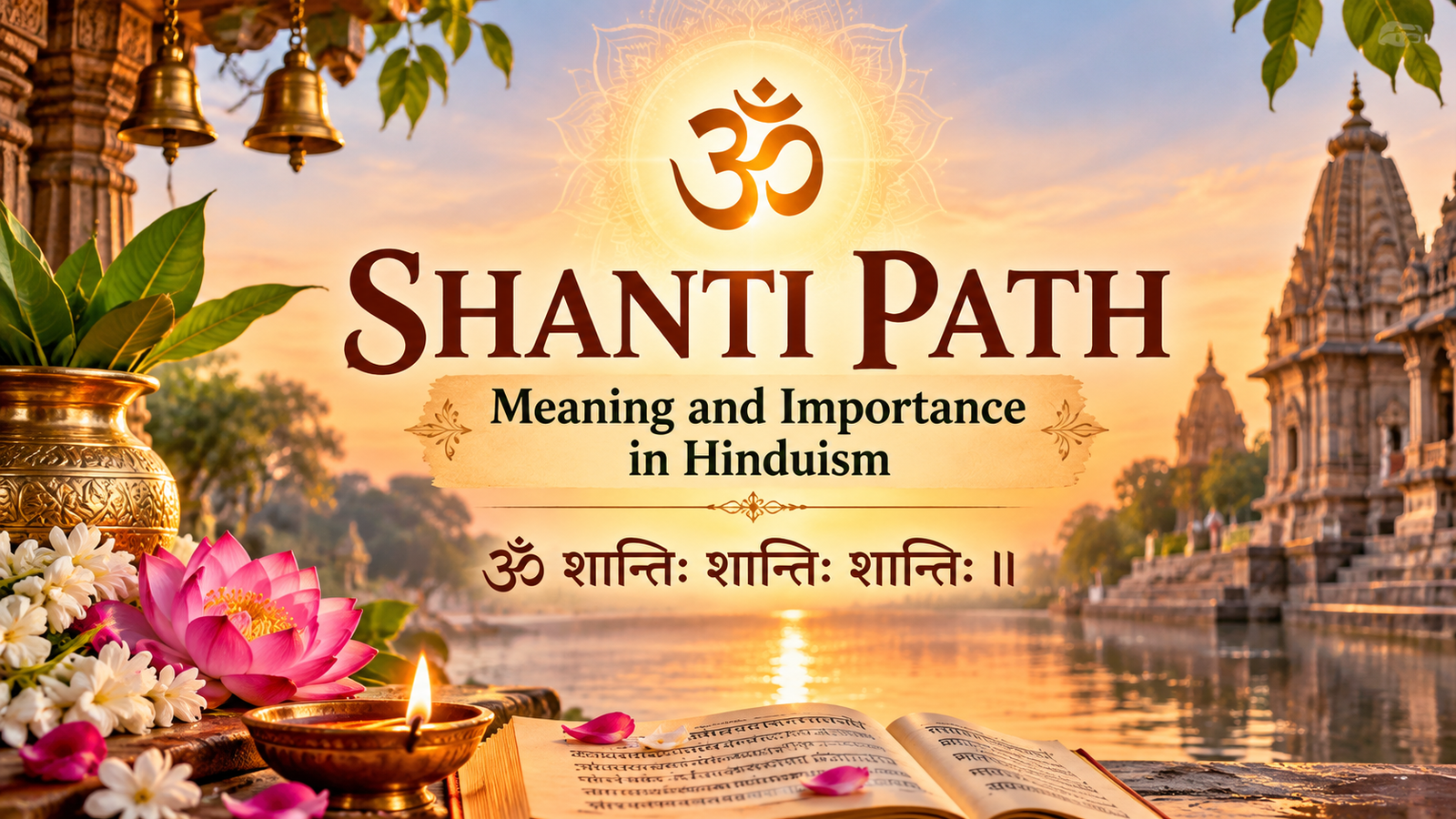
Introduction
Shanti Path is one of the most beautiful and peaceful prayers in Hinduism. The word "Shanti" means peace, while "Path" means prayer or recitation. Together, Shanti Path means a prayer for peace, harmony, and well-being for all living beings.
In Sanatan Dharma, peace is considered an important part of a meaningful and spiritual life. Shanti Path is traditionally recited during religious ceremonies, pujas, Vedic rituals, meditation, and spiritual gatherings. It helps create a positive atmosphere and reminds us to live with kindness, patience, and compassion.
What Is Shanti Path?
Shanti Path is a sacred Vedic prayer that seeks peace from the Divine and harmony throughout the universe.
It is not only a prayer for personal happiness but also a prayer for the welfare of the entire world. It teaches us that true peace should exist within ourselves, in nature, and among all living beings.
Shanti Path is commonly recited at the beginning or end of spiritual activities to create a calm and peaceful environment.
Meaning of the Word Shanti
The Sanskrit word "Shanti" means peace, calmness, and freedom from disturbances.
In Hindu philosophy, peace is not simply the absence of conflict. It is a state of inner balance, spiritual understanding, and harmony with the universe.
The repetition of the word "Shanti" reminds devotees to seek peace in their thoughts, actions, and surroundings.
Famous Shanti Mantra
One of the most popular Shanti Mantras comes from the Upanishads:
ॐ द्यौः शान्तिरन्तरिक्षं शान्तिः
पृथिवी शान्तिरापः शान्तिरोषधयः शान्तिः।
वनस्पतयः शान्तिर्विश्वेदेवाः शान्तिर्ब्रह्म शान्तिः
सर्वं शान्तिः शान्तिरेव शान्तिः
सा मा शान्तिरेधि॥
ॐ शान्तिः शान्तिः शान्तिः॥
Meaning in English
May there be peace in the heavens.
May there be peace in the atmosphere.
May there be peace on Earth.
May there be peace in the waters and plants.
May there be peace in nature and throughout the universe.
May divine peace be everywhere.
May that peace fill our lives.
Om, Peace, Peace, Peace.
Why Is Shanti Path Important in Hinduism?
Shanti Path has a special place in Hindu religious traditions. Its importance can be understood through the following points.
1. Brings Inner Peace
Regularly listening to or chanting Shanti Path can become a peaceful spiritual practice. It encourages us to calm our minds and focus on positive thoughts.
2. Creates a Positive Environment
Shanti Path is often recited during puja and religious ceremonies. Its sacred verses create a devotional atmosphere and encourage peaceful thoughts.
3. Teaches Universal Harmony
The prayer is not limited to one individual or family. It seeks peace for the entire universe, including nature, animals, and all living beings.
4. Reduces Stress and Restlessness
Chanting Sanskrit mantras slowly and mindfully can support relaxation and concentration. It can become a helpful part of daily meditation.
5. Connects Us with Sanatan Dharma
Shanti Path reflects the beautiful teachings of Sanatan Dharma, including compassion, unity, truth, and respect for all forms of life.
Why Is the Word Shanti Repeated Three Times?
Many Shanti Mantras conclude with the repetition:
ॐ शान्तिः शान्तिः शान्तिः॥
The three repetitions are traditionally understood as a prayer for peace from three kinds of disturbances:
1. Adhyatmika: Disturbances arising within ourselves, such as physical or mental suffering.
2. Adhibhautika: Disturbances caused by other living beings and the external world.
3. Adhidaivika: Disturbances associated with natural or cosmic forces beyond our control.
By chanting Shanti three times, devotees pray for peace at all three levels.
When Should We Chant Shanti Path?
There is no single compulsory time to chant Shanti Path. You can recite it during:
- Morning prayers.
- Evening prayers.
- Daily meditation.
- Before or after puja.
- Religious festivals and ceremonies.
- Spiritual gatherings.
- Special occasions at home.
Many devotees prefer chanting it in the morning because it helps them begin their day with peaceful and positive thoughts.
Benefits of Chanting Shanti Path
Shanti Path offers several spiritual and personal benefits:
- Encourages positive thinking.
- Helps develop patience and calmness.
- Promotes spiritual awareness.
- Encourages compassion and kindness.
- Creates a peaceful devotional atmosphere.
- Reminds us to respect nature and all living beings.
- Inspires us to pray for universal welfare.
Its benefits are deeply connected with faith, devotion, and mindful practice.
Shanti Path and the Message of Sanatan Dharma
Sanatan Dharma teaches that the entire universe is interconnected. Human beings, animals, plants, rivers, mountains, and nature are all part of creation.
Shanti Path carries this message through its prayer for universal peace.
It reminds us that happiness is not complete when only one person is peaceful. True harmony comes when everyone lives with respect, love, and understanding.
This is why Shanti Path remains meaningful in Hindu spiritual life even today.
Conclusion
Shanti Path is more than a religious prayer. It is a beautiful message of peace, unity, and universal well-being.
By chanting Shanti Path with devotion and understanding, we remind ourselves to live peacefully, think positively, and spread kindness in the world.
Let us pray not only for our own happiness but also for the peace of every living being.
ॐ शान्तिः शान्तिः शान्तिः॥
May peace be within us, around us, and throughout the universe.
Frequently Asked Questions (FAQs)
1. What is the meaning of Shanti Path?
Shanti Path means a sacred prayer for peace, harmony, and the well-being of all living beings.
2. Why is Shanti Path chanted three times?
The word Shanti is repeated three times to pray for peace from three kinds of disturbances: Adhyatmika, Adhibhautika, and Adhidaivika.
3. When should we chant Shanti Path?
It can be chanted during morning or evening prayers, meditation, puja, and religious ceremonies.
4. What are the benefits of Shanti Path?
It encourages inner calmness, positive thinking, spiritual awareness, and universal harmony.
5. Is Shanti Path mentioned in the Vedas?
Shanti Mantras are found in Vedic and Upanishadic traditions. Different Shanti Mantras are associated with different Vedic recensions and Upanishads.
6. Can we chant Shanti Path every day?
Yes. Anyone can include Shanti Path in their daily spiritual routine with devotion and respect.