
What is Bhagavad Gita? – The Complete Guide to Bhagavad Gita
Sep 22, 2026 · 7 min read · 186 views

Meta Description: Discover what the Bhagavad Gita is, its history, teachings, importance, and timeless lessons about karma, duty, devotion, knowledge, and spiritual life.
Introduction
The Bhagavad Gita, often known simply as the Gita, is one of the most important spiritual texts of Hinduism. It contains a profound conversation between Lord Krishna and Arjuna on the battlefield of Kurukshetra. The teachings of the Gita explain important questions about life, duty, action, devotion, knowledge, the soul, and the path to spiritual liberation.
The Bhagavad Gita is a part of the ancient Indian epic Mahabharata. It consists of 18 chapters and approximately 700 verses. Although the conversation takes place in the setting of a great war, its teachings are relevant to everyday life.
What Does Bhagavad Gita Mean?
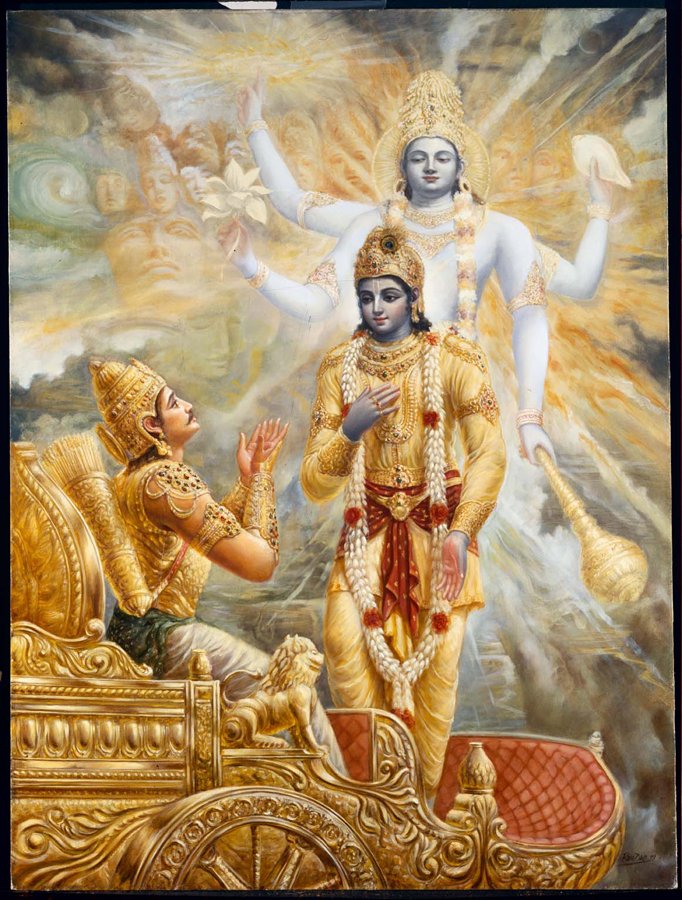
The word Bhagavad Gita means “The Song of the Lord.” It is traditionally understood as the divine teachings given by Lord Krishna to Arjuna.
Arjuna was a skilled warrior, but before the battle began, he became confused and emotionally distressed. He did not want to fight against his relatives, teachers, and loved ones. Seeing Arjuna's confusion, Lord Krishna guided him through spiritual wisdom.
This conversation forms the foundation of the Bhagavad Gita.
Where Was the Bhagavad Gita Spoken?
According to Hindu tradition, the teachings of the Bhagavad Gita were spoken by Lord Krishna to Arjuna on the battlefield of Kurukshetra.
The Kurukshetra battlefield represented a difficult moment in the lives of the Pandavas and Kauravas. Arjuna had to make a difficult decision about his duty. Krishna's guidance helped him understand the difference between personal attachment, duty, righteous action, and spiritual knowledge.
Who Wrote the Bhagavad Gita?
The Bhagavad Gita is traditionally attributed to Sage Ved Vyasa, who is also associated with the compilation of the Mahabharata.
Within the Mahabharata, the dialogue between Krishna and Arjuna is presented through the narration of Sanjaya, who describes the events to King Dhritarashtra.
The 18 Chapters of Bhagavad Gita
The Bhagavad Gita has 18 chapters. Each chapter presents different aspects of spiritual wisdom.
Some important themes include:
1. Arjuna's Dilemma – Arjuna's emotional conflict before the battle.
2. The Yoga of Knowledge – Understanding the eternal nature of the self.
3. Karma Yoga – Performing one's duties without attachment to results.
4. The Yoga of Knowledge and Renunciation – Understanding divine wisdom and action.
5. The Yoga of Renunciation – Balance between action and renunciation.
6. The Yoga of Meditation – Importance of controlling the mind and practicing meditation.
7. Knowledge and Realization – Understanding the nature of the Divine.
8. The Imperishable Brahman – Discussion of the eternal spiritual reality.
9. The Royal Knowledge – Devotion and the supreme nature of God.
10. Divine Manifestations – The divine presence in the universe.
11. The Universal Form – Arjuna's vision of Krishna's cosmic form.
12. The Path of Devotion – The importance of bhakti and loving devotion.
13. The Field and the Knower – Understanding body, consciousness, and the self.
14. The Three Gunas – Sattva, Rajas, and Tamas.
15. The Supreme Person – Understanding the eternal spiritual reality.
16. Divine and Demonic Qualities – Qualities that influence human behavior.
17. Three Types of Faith – Different forms of faith and their characteristics.
18. Liberation Through Renunciation – A summary of the Gita's major teachings.
Main Teachings of Bhagavad Gita
1. Do Your Duty
One of the central teachings of the Bhagavad Gita is the importance of performing one's duty sincerely.
Lord Krishna teaches Arjuna that a person should focus on righteous action rather than becoming excessively attached to the outcome.
This teaching can be applied to work, education, family responsibilities, and everyday life.
2. Do Not Be Attached to the Results
The Gita emphasizes performing actions without being controlled by expectations about their results.
This does not mean that a person should stop caring about the outcome. Rather, it teaches us to focus on sincere effort and responsible action while accepting that the final result may not always be under our control.
3. The Soul is Eternal
The Bhagavad Gita teaches that the Atman, or inner self, is eternal. The physical body changes, but the spiritual self is described as beyond birth and death.
This teaching encourages people to understand life from a deeper spiritual perspective.
4. Control the Mind
The mind plays an important role in human happiness and suffering. The Gita teaches the importance of discipline, meditation, self-control, and developing a balanced mind.
A calm and disciplined mind can help a person make better decisions.
5. Follow the Path of Devotion
Bhakti Yoga, or the path of devotion, is an important teaching of the Gita. It encourages sincere love, faith, surrender, and devotion toward God.
Devotion is presented as a spiritual path that can bring peace and inner strength.
6. Maintain Balance
The Bhagavad Gita teaches the importance of remaining balanced in success and failure, happiness and sorrow, praise and criticism.
Life constantly changes. Developing inner stability can help a person face these changes with greater peace.
Three Important Paths in Bhagavad Gita
The Bhagavad Gita describes different spiritual paths.
Karma Yoga
Karma Yoga is the path of selfless action. A person performs their responsibilities sincerely without selfish attachment to the fruits of their actions.
Jnana Yoga
Jnana Yoga is the path of knowledge and wisdom. It involves understanding the difference between the temporary physical world and the deeper spiritual nature of the self.
Bhakti Yoga
Bhakti Yoga is the path of devotion. It emphasizes love, faith, surrender, and remembrance of God.
These paths can be understood as different approaches to spiritual growth.
Why is Bhagavad Gita Important?
The Bhagavad Gita remains important because its teachings address questions that people continue to face:
- How should we deal with difficult situations?
- How can we control our mind?
- What is our duty?
- How should we deal with success and failure?
- What is the nature of the soul?
- How can we find inner peace?
- What is the meaning of a spiritual life?
Although the Gita originated in an ancient setting, many of its philosophical teachings continue to be studied by people around the world.
Bhagavad Gita and Daily Life
The teachings of the Gita can be reflected in ordinary life. A student can apply the principle of sincere effort to studies. A working person can focus on performing responsibilities honestly. A parent can practice patience and self-control. Anyone facing difficulties can learn the value of maintaining mental balance.
The Gita encourages us to perform our responsibilities with sincerity, develop wisdom, control the mind, and cultivate devotion.
Conclusion
The Bhagavad Gita is much more than an ancient spiritual text. It is a profound dialogue about life, duty, action, knowledge, devotion, the soul, and spiritual growth.
The conversation between Lord Krishna and Arjuna teaches that difficult situations can become opportunities for understanding and inner growth. Its message encourages sincere action, self-discipline, devotion, wisdom, and balance.
For millions of devotees and spiritual seekers, the Bhagavad Gita continues to be a source of guidance and inspiration.
Frequently Asked Questions (FAQ)
What is Bhagavad Gita?
The Bhagavad Gita is a sacred Hindu scripture containing the dialogue between Lord Krishna and Arjuna. It is part of the Mahabharata and contains 18 chapters and approximately 700 verses.
Who gave the teachings of Bhagavad Gita?
The teachings were given by Lord Krishna to Arjuna on the battlefield of Kurukshetra.
Who wrote Bhagavad Gita?
The Bhagavad Gita is traditionally attributed to Sage Ved Vyasa as part of the Mahabharata.
How many chapters are there in Bhagavad Gita?
There are 18 chapters in the Bhagavad Gita.
What are the main teachings of Bhagavad Gita?
Important teachings include performing one's duty, acting without attachment to results, controlling the mind, seeking spiritual knowledge, practicing devotion, and maintaining balance in life.
What are Karma Yoga, Jnana Yoga and Bhakti Yoga?
Karma Yoga focuses on selfless action, Jnana Yoga focuses on spiritual knowledge and wisdom, and Bhakti Yoga focuses on devotion and surrender to God.
#BhagavadGita #LordKrishna #KrishnaTeachings #Gita #Hinduism #SanatanDharma #Spirituality #Bhakti #KarmaYoga #BhaktiYoga #JnanaYoga #HinduWisdom
More in Bhagavad Gita

📖 भगवद्गीताअध्याय: १ — अर्जुनविषादयोग (Arjuna Vishada Yoga)
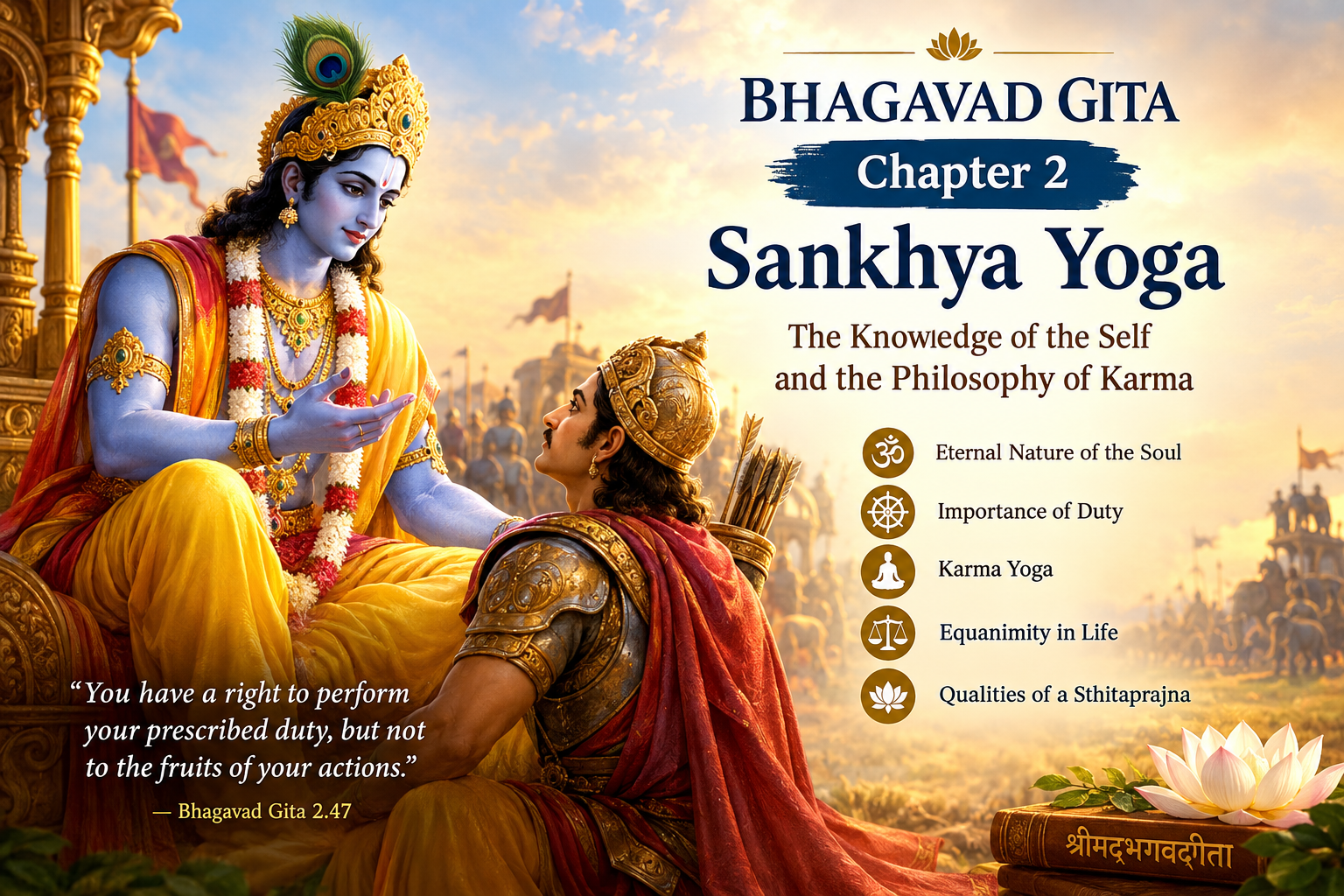
📖भगवद्गीताअध्याय :२ सांख्ययोग — आत्मज्ञान व कर्माचे तत्त्वज्ञान Sankhya Yoga: The Knowledge of the Self and the Philosophy of Karma
