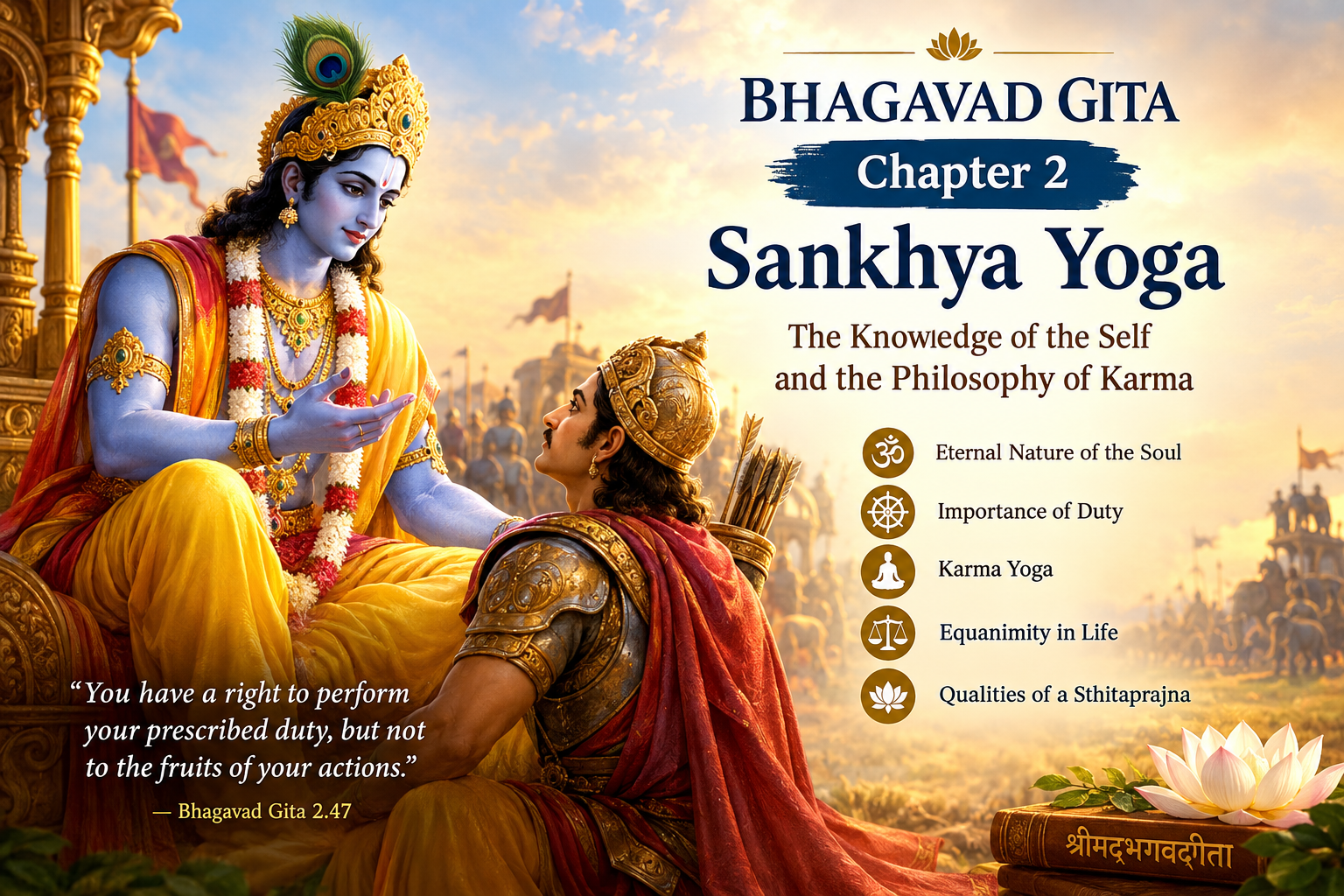
📖भगवद्गीता अध्याय: १५ — पुरुषोत्तम योग (The Yoga of the Supreme Person)
Oct 8, 2026 · 6 min read · 194 views
Introduction
The Bhagavad Gita is one of the most important spiritual texts of Sanatan Dharma. It contains the divine teachings of Lord Krishna to Arjuna and explains the nature of life, the soul, karma, devotion, and the Supreme Reality.
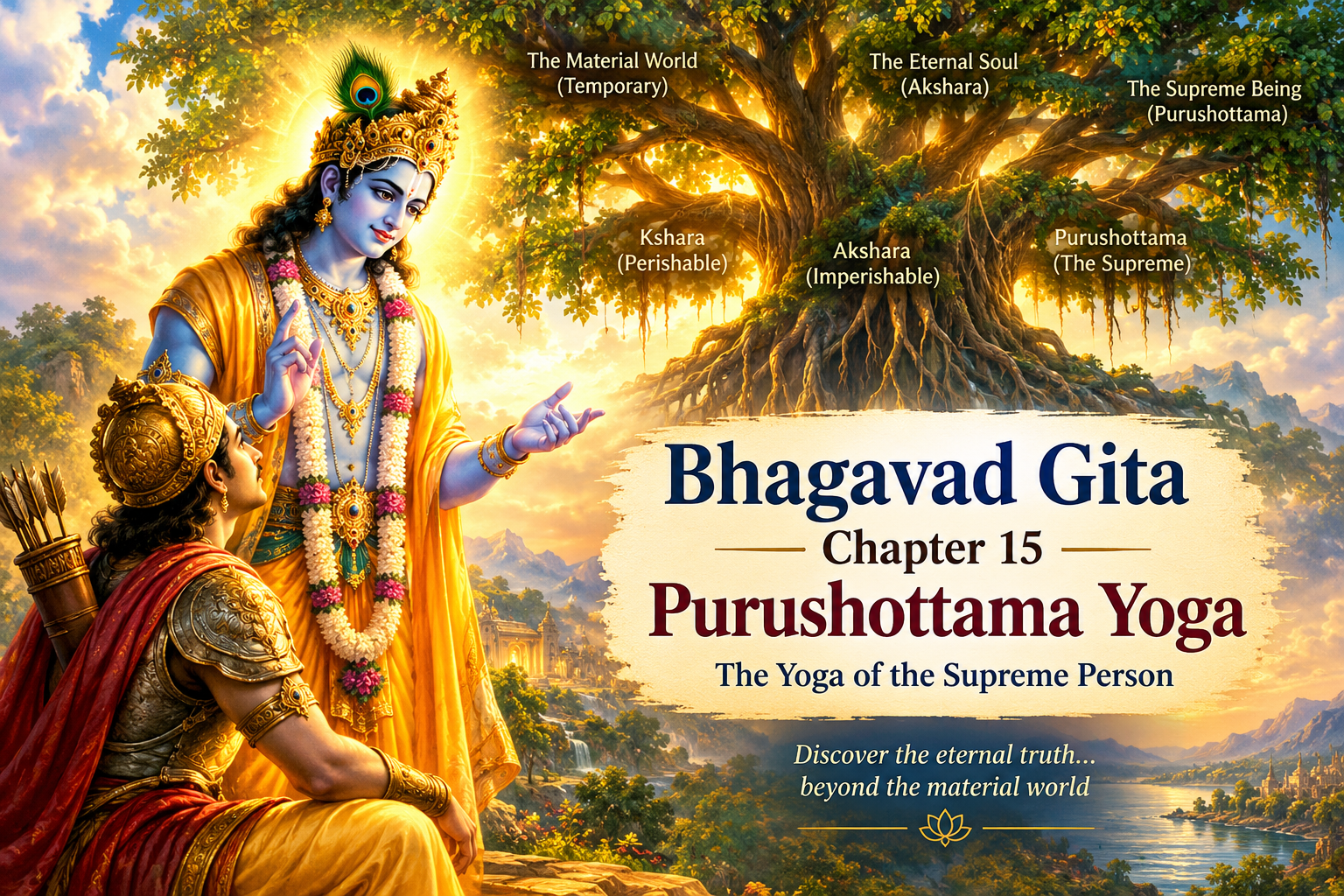
The 15th Chapter of the Bhagavad Gita is known as “Purushottama Yoga,” or the Yoga of the Supreme Person. In this chapter, Lord Krishna explains the nature of the material world, the eternal soul, the Supreme Being, and the path toward spiritual realization.
Purushottama Yoga teaches us that the material world is temporary, while the soul is eternal. A person who understands this truth and seeks refuge in the Supreme can move beyond worldly attachments and attain spiritual wisdom.
The Symbolism of the Ashvattha Tree
Lord Krishna describes the material world as an extraordinary Ashvattha tree, whose roots are above and branches are below.
This cosmic tree represents the cycle of worldly existence. Its branches spread in different directions and are nourished by the three Gunas—Sattva, Rajas, and Tamas.
The tree represents how human beings become attached to worldly desires, relationships, actions, and material pleasures.
Lord Krishna advises Arjuna to cut this deeply rooted tree with the strong weapon of detachment and seek the eternal Supreme Reality.
The Importance of Detachment
Attachment to temporary things can become a major obstacle on the spiritual path. Wealth, possessions, fame, relationships, and physical pleasures are all temporary.
Krishna does not teach us to abandon our responsibilities. Instead, He teaches us to perform our duties without excessive attachment to their results.
True detachment means performing our responsibilities sincerely while understanding that everything in the material world is temporary.
The Eternal Soul
One of the central teachings of the Bhagavad Gita is that the soul is eternal.
The body changes from childhood to youth and old age, but the soul remains eternal. At death, the soul leaves one body and continues its journey according to karma.
Understanding the eternal nature of the soul helps a person overcome excessive fear, sorrow, and attachment.
The Journey of the Soul
Lord Krishna explains that the individual soul carries the subtle impressions of the mind and senses from one body to another.
Just as a person changes clothes, the soul moves from one body to another according to its karma and consciousness.
This teaching reminds us that our present life is part of a larger spiritual journey.
Lord Krishna as the Supreme Being
In Chapter 15, Lord Krishna reveals His relationship with the entire universe. He explains that He is the source of spiritual energy and the support of all living beings.
The Supreme Being is beyond both the temporary material world and the individual soul. Krishna therefore describes Himself as Purushottama—the Supreme Person.
Understanding the Supreme Being is considered an important step toward spiritual liberation.
Kshara, Akshara and Purushottama
Lord Krishna explains three important principles:
1. Kshara – The Perishable
Everything material is temporary and subject to change. The physical body and material creations belong to this category.
2. Akshara – The Imperishable
The individual soul is eternal and does not perish with the physical body.
3. Purushottama – The Supreme Person
Beyond the perishable material world and the individual soul is the Supreme Being, Lord Krishna, who is the ultimate source and foundation of existence.
Why Is Krishna Called Purushottama?
The word Purushottama means “the Supreme Person” or “the Highest Being.”
Lord Krishna explains that He is beyond the temporary material world and beyond the imperishable individual soul. He is the Supreme Reality who sustains and supports the entire universe.
Therefore, knowing and surrendering to the Supreme Being is an important part of the spiritual path.
The Message of Purushottama Yoga
The 15th chapter gives us a powerful spiritual message: Do not become permanently attached to a temporary world.
We should live responsibly, perform our duties, develop wisdom, practice devotion, and remember the eternal nature of the soul.
Material life may bring happiness and sorrow, success and failure, gain and loss. But spiritual wisdom helps us remain balanced through all these experiences.
Life Lessons from Bhagavad Gita Chapter 15
Purushottama Yoga offers several valuable lessons for everyday life:
- The material world is temporary.
- The soul is eternal.
- Excessive attachment can create suffering.
- We should perform our duties sincerely.
- We should develop spiritual knowledge.
- We should control unnecessary desires.
- Devotion helps purify the mind.
- True happiness comes from understanding our spiritual nature.
- The Supreme Being is the ultimate source of everything.
- Spiritual realization leads us toward liberation.
Conclusion
Bhagavad Gita Chapter 15 – Purushottama Yoga gives us a deeper understanding of the soul, the material world, and the Supreme Being.
Lord Krishna teaches that worldly existence is temporary, while the soul is eternal. By developing detachment, spiritual wisdom, devotion, and surrender to the Supreme, a person can rise above material bondage.
Purushottama Yoga is therefore not only a philosophical teaching but also a practical guide for living a peaceful and spiritually meaningful life.
The message of Lord Krishna continues to inspire millions of people: understand your true spiritual nature, perform your duties with sincerity, let go of excessive attachment, and seek the eternal Supreme Reality.
Frequently Asked Questions
What is Chapter 15 of the Bhagavad Gita called?
Chapter 15 is called Purushottama Yoga, meaning the Yoga of the Supreme Person.
What does the Ashvattha tree represent?
The Ashvattha tree represents the material world and the cycle of worldly existence, with its branches symbolizing the various aspects of material life.
What is the main teaching of Purushottama Yoga?
The main teaching is to understand the temporary nature of the material world, recognize the eternal soul, overcome attachment, and realize the Supreme Being.
Who is Purushottama?
Purushottama refers to the Supreme Person, Lord Krishna, who is described as being beyond the perishable material world and the individual soul.
Why is Bhagavad Gita Chapter 15 important?
Chapter 15 helps us understand the relationship between the material world, the individual soul, and the Supreme Being, while guiding us toward spiritual wisdom and liberation.
Final Thought
“The world is temporary, the soul is eternal, and the Supreme Being is the ultimate truth. Understanding this is the beginning of spiritual wisdom.”
#BhagavadGita #Chapter15 #PurushottamaYoga #LordKrishna #KrishnaTeachings #SanatanDharma #Spirituality #HinduPhilosophy #BhagavadGitaTeachings #SpiritualWisdom
More in Bhagavad Gita

What is Bhagavad Gita? – The Complete Guide to Bhagavad Gita
📖 भगवद्गीताअध्याय: १ — अर्जुनविषादयोग (Arjuna Vishada Yoga)