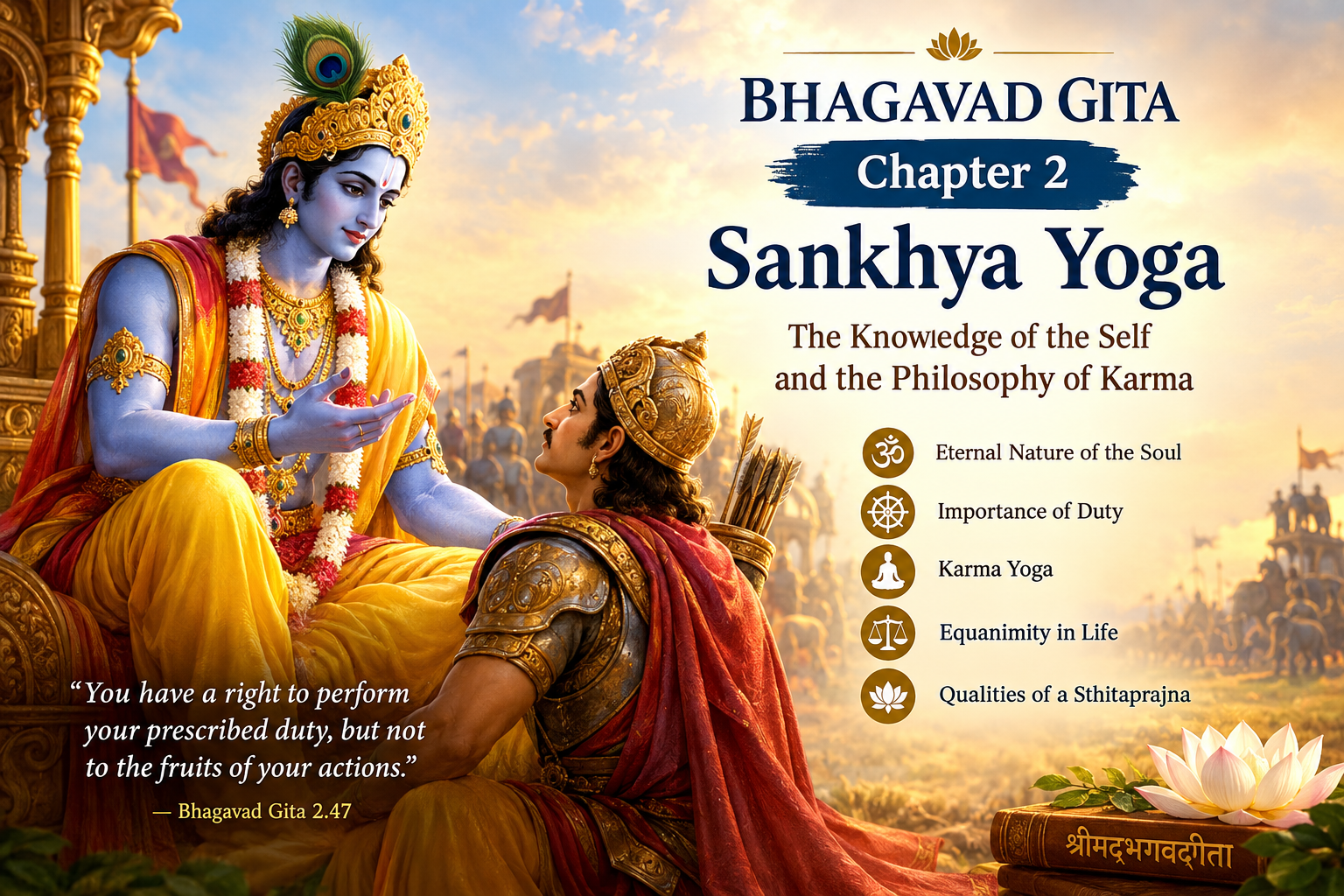
📖भगवद्गीतेचा अध्याय :१७ – श्रद्धात्रयविभागयोग (The Yoga of the Threefold Faith) 🙏
Oct 10, 2026 · 7 min read · 102 views

Introduction
The Bhagavad Gita is one of the most sacred and influential scriptures of Hinduism. It contains the divine teachings of Lord Krishna to Arjuna on the battlefield of Kurukshetra. Each chapter of the Bhagavad Gita offers valuable lessons about life, duty, spirituality, devotion, and self-realization.
Chapter 17 is known as Shraddhatraya Vibhaga Yoga, which means “The Yoga of the Threefold Faith.” In this chapter, Lord Krishna explains the three types of faith—Sattvic, Rajasic, and Tamasic—and how they influence human thoughts, actions, worship, food habits, charity, and spiritual practices.
This chapter teaches us that our faith reflects our inner nature and plays an important role in shaping our lives.
1. What Is Chapter 17 of the Bhagavad Gita About?
In Chapter 17, Arjuna asks Lord Krishna about people who worship with faith but do not follow the prescribed teachings of the scriptures. He wants to understand the nature of their faith.
Lord Krishna explains that faith is influenced by the three gunas, or qualities of nature:
- Sattva: Purity, wisdom, harmony, and goodness.
- Rajas: Desire, ambition, attachment, and restlessness.
- Tamas: Ignorance, confusion, and inertia.
According to Krishna, a person's faith generally reflects the qualities that dominate their nature. Therefore, spiritual growth requires self-awareness, purity of intention, and the cultivation of positive qualities.
2. The Three Types of Faith
Sattvic Faith
Sattvic faith is pure, peaceful, and guided by wisdom. People with Sattvic faith worship with sincerity and devotion. They perform good actions without expecting rewards or recognition.
They value truth, compassion, discipline, and the welfare of others. Their spiritual practices are intended to purify the mind and bring them closer to the Divine.
Lesson: Develop faith that encourages kindness, honesty, peace, and selfless service.
Rajasic Faith
Rajasic faith is influenced by desires, ambition, and attachment to results. A person with this type of faith may perform religious activities to gain wealth, power, recognition, or personal success.
Although such activities may involve devotion, they are often driven by expectations and a desire for rewards.
Lesson: Practise devotion with sincerity instead of focusing only on material benefits.
Tamasic Faith
Tamasic faith arises from ignorance, confusion, and misguided understanding. It may involve harmful practices, superstition, or actions that cause suffering to oneself or others.
Lord Krishna teaches that spiritual practices should be guided by wisdom and should not promote harm.
Lesson: Follow a path of knowledge, compassion, and responsible action.
3. The Three Types of Food
In Chapter 17, Lord Krishna also explains how food is associated with the three gunas.
Sattvic Food
Sattvic food is described as nourishing, wholesome, fresh, and pleasant. It supports health, vitality, and mental clarity.
Rajasic Food
Rajasic food is described as excessively bitter, sour, salty, hot, pungent, dry, or burning. According to the chapter, such food can contribute to discomfort and restlessness.
Tamasic Food
Tamasic food includes food that is stale, tasteless, decomposed, or impure.
The broader spiritual lesson is to develop mindful eating habits and choose food that supports well-being.
4. The Three Types of Yajna (Sacrifice)
Yajna refers to a sacred offering or sacrificial act.
Sattvic Yajna: Performed according to proper principles, with sincere faith and without expecting personal rewards.
Rajasic Yajna: Performed mainly for personal benefit, recognition, or display.
Tamasic Yajna: Performed without proper understanding, faith, or respect for the principles of the practice.
Krishna teaches that the intention behind an action is as important as the action itself.
5. The Three Types of Tapas (Austerity)
Lord Krishna describes three forms of spiritual discipline.
Physical Discipline
Physical tapas includes respecting teachers and elders, practising cleanliness, maintaining simplicity, and avoiding harm to others.
Discipline of Speech
Speech-related tapas means speaking truthfully, using kind and beneficial words, avoiding unnecessary harshness, and studying sacred teachings.
Mental Discipline
Mental tapas includes cultivating calmness, gentleness, self-control, purity of intention, and a peaceful mind.
These teachings remind us that spirituality is not limited to rituals. It also involves how we behave, speak, and think every day.
6. The Three Types of Charity (Dana)
Charity is an important teaching in the Bhagavad Gita.
Sattvic Charity: Giving to someone who genuinely needs help, at the appropriate time and place, with respect and without expecting anything in return.
Rajasic Charity: Giving with the expectation of receiving something in return or gaining recognition.
Tamasic Charity: Giving carelessly, disrespectfully, or at an inappropriate time and place without proper consideration.
Krishna encourages people to give with compassion, humility, and a sincere desire to help others.
7. The Spiritual Meaning of “Om Tat Sat”
At the end of Chapter 17, Lord Krishna explains the spiritual significance of the three expressions: Om, Tat, and Sat.
- Om: A sacred syllable associated with the Divine and spiritual practice.
- Tat: Meaning “That,” it points toward the Supreme Reality and selfless dedication.
- Sat: Associated with truth, goodness, and that which is real and enduring.
These expressions remind spiritual seekers to dedicate their actions to a higher purpose rather than acting only for personal gain.
The chapter also explains that an action performed without faith is considered spiritually incomplete, even when it involves rituals, charity, or austerity.
8. Important Life Lessons from Bhagavad Gita Chapter 17
Chapter 17 offers several lessons for modern life:
1. Keep your intentions pure: Good actions become more meaningful when performed sincerely.
2. Practise self-control: Discipline in thoughts, words, and actions helps build character.
3. Give without expectations: True charity comes from compassion, not the desire for praise.
4. Choose wisely: Food, habits, and daily actions can influence your physical and mental well-being.
5. Speak kindly: Truth should be expressed in a way that is helpful and considerate.
6. Develop spiritual understanding: Faith becomes stronger when supported by wisdom and reflection.
7. Avoid harmful practices: Spirituality should encourage goodness, not suffering or cruelty.
Conclusion
Bhagavad Gita Chapter 17, Shraddhatraya Vibhaga Yoga, teaches that faith is closely connected with our inner nature and daily choices. Through the three types of faith, food, sacrifice, austerity, and charity, Lord Krishna explains how our intentions influence the quality of our actions.
The chapter encourages us to cultivate Sattvic qualities such as purity, kindness, truthfulness, self-discipline, and selfless service.
Its message remains relevant today: true spirituality is not merely about performing religious rituals but about living with faith, wisdom, compassion, and good intentions.
By understanding these teachings and applying them in everyday life, we can work toward a more peaceful, meaningful, and spiritually balanced existence.
Frequently Asked Questions (FAQs)
1. What is the name of Bhagavad Gita Chapter 17?
Chapter 17 is called Shraddhatraya Vibhaga Yoga, meaning the Yoga of the Threefold Faith.
2. What are the three types of faith in Chapter 17?
The three types are Sattvic, Rajasic, and Tamasic faith.
3. What does Lord Krishna teach about charity?
Lord Krishna teaches that the highest form of charity is given at the appropriate time and place, to a deserving person, with respect and without expecting a reward.
4. What are Om, Tat, and Sat?
They are three sacred expressions explained in the chapter and associated with the Divine, selfless dedication, truth, and goodness.
5. Why is Bhagavad Gita Chapter 17 important?
It explains how faith, intention, discipline, food, worship, and charity influence spiritual development and everyday life.
6. What is the main message of Chapter 17?
The main message is to cultivate pure faith, perform good actions with sincere intentions, practise self-discipline, and help others without selfish expectations.
Jai Shri Krishna! 🙏
May the divine teachings of the Bhagavad Gita inspire us to live with wisdom, faith, kindness, and peace.
More in Bhagavad Gita

What is Bhagavad Gita? – The Complete Guide to Bhagavad Gita

📖 भगवद्गीताअध्याय: १ — अर्जुनविषादयोग (Arjuna Vishada Yoga)